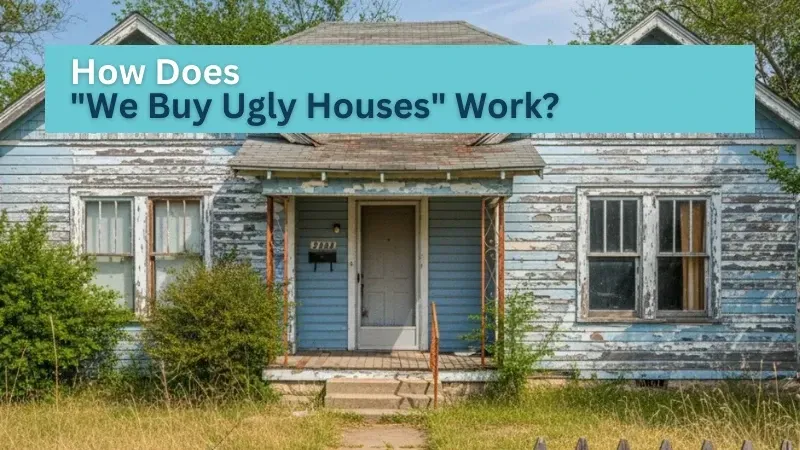
How Does "We Buy Ugly Houses" Work?
If you’re looking into how we buy ugly houses works, you’re likely comparing different ways to sell and trying to understand what to expect. Direct buyers often promote speed and simplicity, but it’s important to understand how the process actually works before moving forward.
You may be weighing convenience against price, or wondering how this approach compares to listing traditionally. A common follow-up question is how much we buy houses pay, which depends on how each company evaluates risk, repairs, and resale potential.
Taking a closer look at how these offers are structured can help you decide which option aligns best with your goals.

How the “We Buy Ugly Houses” Model Works
Companies that advertise they buy ugly houses are typically real estate investors. Their goal is to purchase properties that may need updates, repairs, or improvements, then resell them later.
The process generally follows these steps:
You contact the houses company to request information.
They evaluate your property.
They calculate what the home could sell for after repairs.
They subtract repair costs, holding expenses, and profit margin.
They present a cash offer.
If you accept, they move forward with paperwork and schedule a closing date.
Most cash buyers aim to make the process faster and simpler than traditional listing. Many can close in a 30-day window or sometimes sooner, depending on title and documentation.
This model removes many traditional selling steps, but it also changes how the offer is priced.
How Much Does We Buy Houses Pay?
When homeowners ask, how much does we buy houses pay, they’re usually trying to measure it against what they might receive by listing their property with real estate agents. That comparison is natural, but the two approaches operate under very different pricing strategies.
Traditional buyers purchase a home based on current retail demand. Their offer reflects what they believe the home is worth to live in today, influenced by comparable sales, neighborhood appeal, and buyer competition. When market conditions are strong, this can sometimes lead to a higher final sale price.
Real estate investors, however, approach pricing from a different angle. They evaluate the property based on resale potential after improvements. Instead of paying what the home is worth now in finished condition, they calculate what it may be worth after updates and improvements, and then account for the costs and risks involved in getting it there.
Because investors plan to renovate and resell, their offer will usually be below the full market sale price.
The offer typically reflects:
Estimated repair costs
Local real estate demand
Holding expenses such as taxes and insurance
Current market conditions
Built-in profit margin to offset risk
Investors also consider how long the property may sit before resale, possible shifts in the market, and unexpected repair issues. All of these variables influence the final number presented.
That doesn’t automatically mean the offer is unfair. It simply reflects a different pricing model built around speed, risk management, and convenience rather than maximizing retail value.
For some homeowners, the certainty of a straightforward transaction, a predictable closing timeline, and fewer moving parts outweigh the possibility of securing a higher price on the open market. Others may decide that pursuing retail buyers better aligns with their financial goals.
Understanding the reasoning behind the pricing helps you evaluate the offer more objectively and decide which path best fits your situation.

What Makes a Cash Buyer Different?
A cash buyer typically removes financing from the equation. That one difference changes the entire transaction.
When there is no lender involved, you often avoid:
Mortgage approval delays
Appraisal requirements
Financing contingencies
Strict lender repair conditions
Last-minute underwriting surprises
Extended waiting periods before closing
Traditional buyers usually depend on bank approval. That means the sale can hinge on credit checks, income verification, appraisals, and lender guidelines. Even after an offer is accepted, financing can fall through, which may delay or cancel the transaction entirely.
A direct buyer simplifies this process because the purchase does not depend on outside loan approval. Fewer third parties are involved, which often leads to a more predictable timeline and fewer unexpected obstacles.
In addition, cash buyers often purchase properties in their current condition. That can reduce the need for repairs, staging, or preparation before closing.
However, it’s important to understand the trade-off. When a company purchases homes for cash, it assumes more responsibility and financial risk. The buyer takes on renovation costs, market fluctuations, holding expenses, and resale uncertainty. That risk is built into the offer price.
For homeowners who value speed, flexibility, and reduced complexity, this model can offer peace of mind. For those focused primarily on achieving the highest possible sale price, a traditional listing may feel more appropriate.
Understanding how a cash buyer operates helps you compare options more clearly and choose the path that aligns with your priorities.
Comparing to Listing Your Home
When listing your home through local real estate channels, the primary goal is usually to generate as much exposure as possible and secure the highest achievable sale price. A well-marketed listing can attract attention from multiple buyers, especially in strong local real estate markets.
However, the traditional route often comes with added preparation and responsibilities.
Listing typically involves:
Repairs and updates to improve market appeal
Deep cleaning and staging to present the home at its best
Scheduling and accommodating showings and open houses
Negotiating offers and counteroffers
Waiting for buyer financing approvals
Paying agent commissions
Covering certain closing costs
There may also be a service fee tied to marketing efforts, photography, listing management, or transaction coordination.
Beyond the financial considerations, listing requires time and flexibility. You may need to keep the home in show-ready condition, leave during appointments, and adjust your schedule around potential buyers. If inspections uncover issues, you may face repair requests or price negotiations late in the process.
Even after accepting an offer, the sale often depends on the buyer’s lender approval, appraisal results, and underwriting review. Delays can occur, and occasionally contracts fall through, requiring the home to return to the market.
While this route can sometimes result in a higher price, it often demands more effort, preparation, and patience.
In contrast, selling your home directly to a cash buyer can eliminate many of these steps. There are typically no open houses, fewer contingencies, and less need for repairs or staging. The transaction may move more quickly and involve fewer parties.
Neither option is automatically better. The choice depends on whether your priority is maximizing the sale price or simplifying the overall process. Understanding the differences allows you to choose the path that best fits your timeline and comfort level.
Why Some Sellers Choose a Home for Cash
Some homeowners choose to sell their house for cash because the traditional process feels too complicated, time-consuming, or uncertain for their situation. While listing may offer the potential for a higher sale price, it also requires preparation, flexibility, and patience.
Common reasons sellers move toward a direct cash sale include:
The property needs repairs they don’t want to manage
They want to avoid open houses and repeated showings
They prefer a firm and predictable closing date
They want fewer negotiations and contingencies
They need a reliable timeline for relocation or financial planning
When a home requires updates, coordinating contractors and budgeting for improvements can delay the sale. Some homeowners simply don’t want to invest additional time or money into a property they plan to leave behind.
Open houses and showings can also be disruptive. Keeping the home clean and ready for visitors, adjusting schedules, and accommodating last-minute appointments can feel overwhelming, especially during busy life transitions.
A fixed closing date can bring peace of mind. Traditional buyers often rely on financing, inspections, and appraisal approvals. A cash transaction may remove some of that uncertainty and provide clearer expectations from start to finish.
Selling directly can feel simpler, particularly when the property is older, inherited, or in need of modernization. Instead of focusing on presentation and staging, the emphasis shifts toward completing the transaction efficiently.
The trade-off is usually between convenience and the possibility of maximizing the sale price. Some sellers decide that a smooth and predictable experience is worth more than pursuing every potential dollar. Others may prefer to invest time and effort in exchange for aiming at a higher return.
The right choice ultimately depends on your priorities, your timeline, and how much involvement you want in the selling process.
How Local Real Estate Conditions Matter
Local real estate conditions influence every offer.
If demand is strong, traditional buyers may compete, and you could receive multiple offers when listing.
If demand slows, listings may take longer to sell.
Cash buyers often operate consistently regardless of short-term market shifts. That predictability can be valuable if you need certainty.
Working with a buyer who understands local real estate trends helps ensure the offer reflects neighborhood conditions.
Different Approach to Selling Your Home
When you’re comparing companies that buy ugly houses, you’re not just comparing numbers. You’re deciding who you feel comfortable working with and how you want the process to unfold.
At Spire Home Buyers, we approach home buying as a conversation first, not just a transaction. Every property and every homeowner’s situation is different. That’s why we focus on understanding your goals before discussing numbers.
Unlike some national franchise-based operations, we operate locally. That means decisions are made here, not passed through layers of corporate approval. We look at each home individually and explain how we arrived at an offer, rather than relying solely on standardized formulas.
Our approach includes:
Explaining how your offer was calculated
Avoiding commissions or listing-related service fees
Being upfront about closing costs
Working around your preferred timeline
Purchasing homes in their current condition
If you decide to get a cash offer, our goal is to make the process informative and transparent. You should understand exactly what you’re agreeing to and how it compares to listing your home.
Selling your house is a significant decision. It shouldn’t feel rushed, confusing, or pressured. Whether you ultimately choose to work with us or pursue another path, our priority is helping you make a choice that feels clear and comfortable.
The Emotional Side of Selling
Selling your home is not just a transaction. It’s often tied to life transitions, relocation, downsizing, financial shifts, or inherited property.
Traditional listing can feel stressful when preparing for showings or negotiating with buyers.
A direct home-buying option may remove some of that emotional strain by simplifying the process.
It doesn’t work for everyone, but for many homeowners, reducing uncertainty provides peace of mind.
Understanding the Trade-Off
When deciding how to sell your home, it helps to step back and clarify what matters most to you. Every selling method comes with advantages and limitations, and the best choice depends on your personal priorities.
Ask yourself:
Is your goal the highest possible price, even if it takes longer?
Is your priority a smooth and predictable process?
Do you want to avoid making repairs or updates?
Do you want to avoid paying a service fee or commission?
How soon do you want to close?
How much uncertainty are you comfortable with?
There isn’t one correct path. The “right” decision depends on your timeline, financial goals, and tolerance for complexity.
Some sellers prefer working with real estate agents because they want maximum exposure and the chance to receive multiple offers. They are willing to prepare the property, manage showings, and navigate negotiations in exchange for the possibility of achieving a higher price.
Others prefer the simplicity of working with a company that purchases homes directly. They may value a set closing date, fewer contingencies, and a streamlined transaction. For them, certainty and reduced stress outweigh the pursuit of every possible dollar.
It’s also important to consider your current life situation. If you are relocating quickly, handling an inherited property, downsizing, or dealing with financial pressure, predictability may matter more than price optimization. On the other hand, if you have flexibility and time, the traditional market may offer opportunities worth exploring.
Understanding this trade-off allows you to make a balanced decision instead of reacting to advertising claims or assumptions. When you clearly define your priorities, the path forward often becomes much easier to see.
Evaluating Multiple Offers
Even if you’re considering selling directly, it’s wise to compare options.
You might:
Speak with a real estate agent
Request an estimate from a franchise investor
Contact a local buyer
Review recent neighborhood sales
Seeing multiple perspectives helps you understand the full picture.
Transparency and communication should guide your decision.
When Speed Matters
In certain situations, speed becomes the deciding factor:
Relocation deadlines
Financial pressure
Estate settlement
Avoiding extended maintenance costs
Cash buyers often offer predictable closing timelines, sometimes within 30-day windows, depending on title readiness.
That reliability can reduce stress compared to waiting for a financed buyer.
Final Comparison
Here’s a simple breakdown:
Traditional Listing
Potentially higher sale price
Repairs and preparation required
Agent commissions
Longer timelines
Possible multiple offers
Financing risk
Cash Buyer / We Buy Model
Lower purchase price
As-is sale
No commissions
Faster closing
Fewer contingencies
Predictable timeline
Both approaches serve different needs.
The best choice depends on what matters most to you.
Let’s Talk Through Your Options
If you’re considering whether to sell your home directly or explore listing, it helps to talk through the details. Get a cash offer so you can compare your options clearly.
There’s no pressure. Just straightforward guidance to help you decide what fits your timeline and comfort level.

Frequently Asked Questions
How does We Buy Ugly Houses work exactly?
They evaluate your property, estimate resale potential, subtract repair and holding costs, and present a cash offer.
How much does we buy houses pay compared to listing?
Cash offers are typically below full retail value because investors factor in repairs, resale costs, and risk.
Can I still list my home after getting a cash offer?
Yes. You’re not obligated to accept an offer until you sign an agreement. You can compare options before making a decision.
Is selling to a cash buyer faster than listing?
Often yes. Many cash transactions avoid financing delays and can close within a predictable timeline.
Do I have to make repairs before selling to a cash buyer?
In most cases, no. Many companies purchase homes in their current condition, which can save time and preparation costs.
Are there commissions when selling to a direct buyer?
Typically, no agent commissions apply when selling directly to a cash buyer. However, it’s still important to review closing terms carefully.
Will I pay closing costs in a direct sale?
It depends on the buyer. Some cover certain closing costs, while others may structure the offer differently. Always ask for a clear breakdown.
How long does the process usually take?
Timelines vary, but many direct buyers aim to close within a 30-day window or sooner, depending on title and paperwork readiness.
Is a cash offer negotiable?
Sometimes. While many offers are based on firm calculations, some buyers may adjust terms depending on circumstances.
How do I know if a cash sale is right for me?
It depends on your priorities. If speed, simplicity, and predictability matter most, a direct sale may fit. If maximizing price is your goal and you have time, listing may be worth considering.
