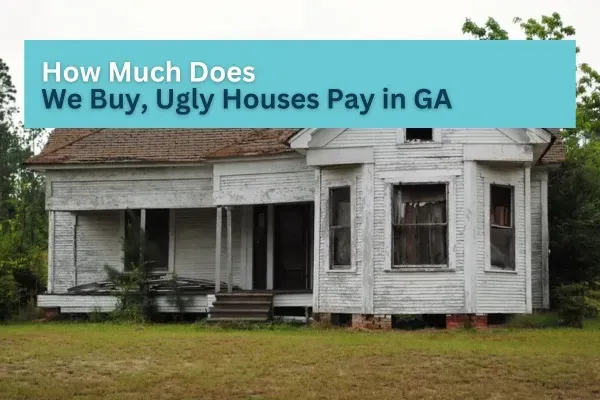
How Much Does We Buy, Ugly Houses Pay in GA
A simple option for homeowners who want clarity, speed, and fewer complications.
If you're thinking about how much does we buy, ugly houses and pay, you’re probably weighing whether a direct cash sale makes sense for your home.
Maybe the house needs repairs.
Maybe you’re relocating.
Maybe you simply want to avoid open houses, showings, and waiting on financing approvals.
That’s completely reasonable.
When you begin researching companies that buy distressed properties, one of the first questions is always about the price. How much will they actually offer? Will it be fair? Will you lose money compared to listing traditionally?
The answer depends on how the offer is calculated and what you value most in the selling process.
Let’s walk through it clearly.

How Buy Ugly Houses Works
Most companies that advertise that they buy distressed properties operate as real estate investors. Many function under national branding as buy ugly houses franchises, while others are independent local operators.
Here’s generally how we buy ugly houses works:
You contact them to request a cash offer.
They evaluate the condition of the property.
They estimate what the home could resell for after improvements.
They subtract renovation costs and business expenses.
They factor in resale risk and profit margin.
They present you with a purchase price.
Their goal is not to pay full retail market value. Their goal is to buy at a level that allows room for repairs and resale profit.
This is standard practice among many cash buyers.
How Much Will We Buy Ugly Houses Pay?
When homeowners ask how much will we buy ugly houses pay, the answer usually depends on three main factors:
The property’s current condition
The strength of the local real estate market
The investor’s pricing formula
Investors typically purchase below market value because they assume responsibility for repairs, resale efforts, and market risk.
That means the offer is often lower than what you might see as a listing sale price on the open market.
However, that lower price reflects convenience and speed.
You avoid:
Repair expenses
Agent commissions
Showings and open houses
Financing delays
Long negotiation cycles
For many home sellers, that trade-off makes sense. For others, aiming for a higher price through traditional listing feels worth the extra effort.
There isn’t one universal right answer. It depends on your situation.
Why the Offer May Feel Lower Than Expected
If you’ve read a positive buy ugly houses review, you may expect a strong offer. But it’s important to understand the investor’s business model.
Cash buyers are not purchasing homes to live in them. They are purchasing with the intent to renovate and resell.
That means they account for:
Repair risk
Carrying costs
Insurance and taxes
Marketing expenses
Resale commissions
Time and capital invested
Because of that, the offer will almost always be lower than a retail buyer’s offer.
This does not automatically mean you are being treated unfairly. It simply reflects how real estate investors operate.

Comparing to Real Estate Agents
When selling your home with real estate agents, the goal is usually to maximize the final sale price. But that path involves more steps:
Cleaning and staging
Repairs or improvements
Professional photos
Open houses
Showings
Negotiations
Buyer inspections
Appraisal requirements
Waiting for a confirmed closing date
You may receive a higher sale price, but you’ll also likely pay:
Agent commissions
Marketing fees
Some closing costs
Possible repair concessions
And there is always the possibility that a buyer’s financing falls through.
So while the headline number may be higher, the overall experience can involve more time and uncertainty.

What Affects a Cash Offer?
Several factors influence how much investors offer when buying your house:
Neighborhood demand
Property condition
Structural or foundation issues
Age of major systems
Comparable home sale data
Overall local real estate trends
If your home needs significant repairs, the offer will reflect that. If the property is structurally sound but dated, the gap between retail value and investor offer may be smaller.
Each home is evaluated differently.
Do Sellers Lose Money Working With Investors?
Many homeowners worry they might lose money by accepting a discounted cash offer.
But the real comparison is not just the sale price. It’s the net outcome.
Consider:
How much would repairs cost?
How long would listing take?
Would you need to manage contractors?
What are commission and closing costs?
What is the value of a fast, predictable closing?
Some homeowners choose speed and simplicity. Others choose to pursue the highest possible price.
Both decisions are valid.
Franchise Investors vs Local Buyers
Many companies that advertise under large national branding operate as buy-ugly-houses franchises. While the brand may be recognized nationally, the buyer is usually a local investor.
Franchise models may follow:
Structured pricing guidelines
Target profit margins
Corporate branding standards
Local independent buyers often operate with:
Greater flexibility
Direct communication
Faster decision-making
Local market knowledge
Some homeowners feel more comfortable working with someone local who understands neighborhood trends and recent home sale patterns closely.
That difference can matter.

Common Mistakes to Avoid When Considering a Cash Offer
When researching how much companies that buy distressed homes pay, it’s easy to focus only on the offer number. But the final outcome depends on more than just price. Avoiding a few common mistakes can help you make a more confident decision.
Focusing only on the headline sale price
The highest offer is not always the best offer. What matters most is your net outcome after commissions, repairs, closing costs, and potential delays. Compare the full picture, not just the top number.
Not asking how the offer was calculated
A reputable buyer should explain how they arrived at the price. If repair estimates or resale assumptions are unclear, ask for clarification. Transparency helps you evaluate fairness.
Skipping multiple comparisons
Even if you plan to sell directly, getting more than one estimate gives you perspective. Comparing options helps you understand whether the offer reflects current market conditions.
Ignoring the closing timeline
A flexible closing date can be valuable. Make sure you understand how quickly the buyer can close and whether the timeline works for you.
Overlooking potential fees
While most cash buyers do not charge agent commissions, you should still confirm who covers closing costs and whether any additional fees apply.
Feeling pressured to decide quickly
A serious buyer should give you time to review the offer and ask questions. If you feel rushed, it’s okay to pause and gather more information.
Selling your house is a major decision. Taking time to review the details carefully can help you avoid surprises and move forward with greater confidence.
Why Some Home Sellers Prefer Direct Sales
Homeowners often choose to sell their houses directly to cash buyers when the traditional listing process feels overwhelming or impractical. Every situation is different, and sometimes simplicity becomes more important than maximizing every possible dollar.
Many sellers prefer a direct sale when:
The property needs repairs, but they don’t want to manage
They want to avoid preparing for open houses and showings
They need a firm closing date due to relocation or financial timing
They prefer a straightforward transaction with fewer steps
They want to avoid agent commissions and listing fees
Repairs alone can delay a home sale. Coordinating contractors, waiting for estimates, and investing additional money into a property may not feel realistic. For some homeowners, especially those juggling work, family, or relocation, the time and effort required can outweigh the potential gain of a slightly higher sale price.
Open houses and showings also require flexibility. Keeping the home ready for visitors, leaving during appointments, and managing ongoing interests can feel disruptive. A direct sale removes that ongoing pressure.
Certainty is another factor. Traditional buyers often rely on financing, which introduces appraisal requirements and lender approvals. Cash buyers typically remove that layer of uncertainty, offering a clearer timeline toward closing.
For homeowners who value predictability and a smooth experience, selling directly can simplify the process and reduce stress. It may not be the right fit for everyone, but for those who prioritize convenience and speed, it can eliminate many of the traditional hurdles involved in selling your home.
Ultimately, the right choice depends on your priorities, whether that’s pursuing the highest possible sale price or choosing a path that feels more manageable and controlled.
Evaluating an Offer Carefully
Before accepting any offer, it’s important to slow down and review the details. A clear explanation should never feel complicated or rushed. Taking time to ask the right questions can help you avoid misunderstandings and make a confident decision.
Consider asking:
How was the offer calculated?
A reputable buyer should explain how they evaluated your property, including how they considered condition, location, and recent home sale activity.
What repair assumptions were made?
If repairs were estimated, ask how those numbers were determined. Understanding the scope of work assumed in the offer helps you see whether the pricing feels reasonable.
Are there any fees?
Clarify whether administrative costs, service charges, or transaction fees apply. Knowing the full breakdown prevents surprises later.
Who pays closing costs?
Some buyers cover closing costs, while others may expect the seller to contribute. Confirm this early so you can compare net proceeds accurately.
Can the price change later?
Ask whether the offer is firm or subject to adjustment after additional inspections. Understanding this upfront helps protect your expectations.
How firm is the closing date?
A reliable buyer should be clear about timing. Whether you need to move quickly or prefer a flexible timeline, make sure the schedule aligns with your needs.
A transparent buyer will explain the numbers openly and answer questions without hesitation. If something feels unclear, it’s reasonable to ask for clarification.
Getting more than one estimate can also help you compare options objectively. Seeing how different buyers evaluate your home gives you perspective and strengthens your ability to choose the path that feels right for you.
Understanding Your Priorities
Before deciding how to move forward, it helps to step back and clarify what matters most to you. Every home sale is different, and your goals should guide the direction you take.
Maximum sale price:
If your top priority is achieving the highest possible sale price, working with real estate agents and listing your home traditionally may be the right fit. This path often involves preparing the home, allowing showings, hosting open houses, and waiting for the right buyer. It can take longer, but in strong markets, it may produce a higher final number.
Fast and predictable home sale:
If timing is more important than maximizing every dollar, cash buyers can provide simplicity. Selling directly often removes financing delays and lengthy negotiations. You may be able to choose a flexible closing date and move forward without waiting for lender approvals.
Minimal repairs and fewer showings:
If you prefer not to invest time or money into repairs, cleaning, or staging, a direct sale can eliminate those steps. Many homeowners choose this route when the property needs updates or when managing showings feels overwhelming.
Ultimately, your personal timeline, financial comfort level, and tolerance for uncertainty should guide your choice. There isn’t one “correct” option, only the one that fits your current situation best.
When a Local Buyer May Be the Better Fit
Some homeowners prefer working with a local company because the process often feels more personal and direct. When you’re selling your house, communication and clarity matter just as much as the final number.
A local buyer typically:
Makes decisions quickly without layers of corporate approval
Understands neighborhood values and recent home sale activity
Communicates directly rather than through call centers
Offers flexibility with terms and closing dates
Instead of navigating corporate structures or standardized franchise formulas, you work with someone who understands your local market conditions and how properties are performing in your area.
That local perspective can lead to more realistic pricing and clearer explanations of how the offer was calculated. It can also mean a smoother experience, especially if you have specific timing needs or unique property concerns.
For many homeowners, knowing they are working with someone familiar with the community adds a level of comfort and confidence during what can otherwise feel like a stressful process.
Ultimately, the right fit depends on what you value most: structure and branding, or flexibility and local insight.
Choosing the Right Path for Your Home Sale
If you’re asking how much does we buy ugly houses pay, the honest answer is that it depends on your property, your local market, and how each investor calculates risk and resale potential.
Cash offers are typically below retail value because investors take on repair responsibility and resale risk. That’s how most companies that work in the “we buy” space structure their pricing.
At Spire Home Buyers, we understand that you’re not just comparing numbers, you’re comparing experiences. We focus on clear communication, local market knowledge, and flexible solutions tailored to your situation.
The right decision isn’t simply about the highest offer. It’s about choosing the path that fits your timeline, comfort level, and overall goals.
Let’s Talk Through Your Options
If you’re considering selling your house and want to understand what a realistic cash offer might look like, it helps to talk through your situation and see what makes sense for you. Compare your options, or get a cash offer so you can review the numbers clearly. Get straightforward information to help you make a confident decision.

Frequently Asked Questions
Do companies that buy ugly houses always pay less than market value?
Usually yes. Investors factor in repairs, resale costs, holding expenses, and profit. That’s why the offer is typically below full retail value.
Can I negotiate a cash offer?
In many cases, yes. If you have recent comparable sales or contractor estimates, you can use that information to discuss the price.
Are there commissions involved when selling to a cash buyer?
Most cash buyers do not charge agent commissions. However, you should confirm how closing costs are handled before signing anything.
Will the offer change after inspection?
Some buyers adjust their offer after a second walkthrough if they find issues. It’s important to ask upfront whether the price is firm.
How fast can I choose a closing date?
Cash buyers often allow flexible closing dates. You may be able to close quickly or select a later timeline depending on your needs.
Do I need to make repairs before selling?
With most investor purchases, you can sell your house as-is. That means no repairs, no updates, and no preparation for open houses.
What if my house has major structural issues?
Many real estate investors purchase properties in poor condition. The offer will reflect the repairs needed, but you typically won’t need to fix anything yourself.
Should I compare offers before deciding?
Yes. Getting more than one estimate helps you understand the range of possibilities and ensures you’re comfortable with your decision.
Is working with a local buyer better than a national franchise?
It depends on your preference. Some homeowners prefer the structure of national branding. Others value local decision-making and flexibility.
How do I know if selling directly is right for me?
Ask yourself what matters most: speed, simplicity, flexibility, or maximum sale price. Your priorities will guide the right choice.
